
IOLTA Annual Certification in California: What It Is and What Happens If You Miss It?

By Tammy Hoang, Certified QuickBooks ProAdvisor

Each year, California attorneys complete an IOLTA annual certification in the form of the State Bar's Client Trust Account Protection Program, known as CTAPP. It is a formal process in which attorneys register their trust accounts, review their practices and certify that client funds are handled correctly under the rules. It is not just another box to check. It is a step that shows your firm's commitment to ethical practice and regulatory compliance.
The annual process promotes transparency and accountability for both clients and law firms. It requires lawyers to review their trust accounting procedures, address potential issues and affirm that their accounts are properly maintained. This guide explains what California requires, who must file, and the part most articles skip: what happens if the filing is missed.
What the Annual Certification Is in California?
California does not use a separate filing named IOLTA annual certification. The yearly obligation comes from California Rule of Court 9.8.5 and State Bar Rules, title 2, division 1, rule 2.5, which together create CTAPP. The program has three parts that attorneys complete each year:
Registration. Licensees responsible for client funds register every trust account in which they held such funds at any time during the reportable period. That includes both IOLTA accounts and interest-bearing accounts held for the client's benefit.
Self-assessment. A responsible licensee completes an annual self-assessment and reports that it was completed.
Certification. The licensee certifies that they are knowledgeable about, and in compliance with, the rules and statutes governing a trust account, including rule 1.15 of the Rules of Professional Conduct.
Because registration covers IOLTA and non-IOLTA accounts, CTAPP compliance reaches further than the pooled account. A firm with one IOLTA and two individual client trust accounts registers all three.
Who Must File, Including Attorneys Without Trust Accounts?

The reporting duty is broader than many attorneys assume. Rule 2.5 requires a licensee to report whether or not they were responsible for client funds. Only licensees who were responsible then register accounts, complete the self-assessment and certify compliance.
This matters for partners, of counsel and associates alike. Responsibility is about who handled client funds during the period, not about job title. A firm should confirm, attorney by attorney, who was responsible for trust funds and which accounts they touched, since the registration list must be complete.
Practical records help here. Keep a running list of every trust account the firm opened, held or closed during the year, with the bank, the account type and the dates. It is much easier to register accurately from a list than to rebuild one in a hurry.
Orange County attorneys with several partners often find the account list is the hardest part. Strong attorney trust account bookkeeping and law firm trust accounting make it easy to list every account, and California IOLTA compliance starts with that list under the attorney client trust account rules.
When the Filing Is Due?

Under rule 2.5, the deadline is the licensee's due date for paying annual license fees, and the State Bar's schedule of charges lists the CTAPP noncompliance fee with a March 30 deadline. Dates and procedures can change from year to year, so confirm the current year's requirements on the State Bar's CTAPP pages before you file.
A sound habit is to treat the filing like a year-end close. Reconcile the trust accounts through the period, confirm the list of accounts, and complete the self-assessment before the deadline, not on it. That timing leaves room to fix problems the self-assessment turns up.
Preparing for your CTAPP filing?
Irvine Bookkeeping can organize your trust account records and account list before you certify.
What Happens If You Miss It?

The State Bar's rules set out the consequences in order. Noncompliance means failing to complete the annual certification, registration or self-assessment requirements, or failing to pay the fees for noncompliance. From there:
The State Bar can send a notice of noncompliance.
A licensee who does not comply as instructed is involuntarily enrolled as inactive.
Inactive enrollment is administrative and requires no hearing. A licensee who is inactive is not eligible to practice law.
Enrollment ends when the licensee submits proof of compliance and pays the required fees.
The fees are listed in the State Bar's schedule of charges and deadlines. In the 2026 schedule, the CTAPP noncompliance fee is $106.00, and the reinstatement fee to terminate CTAPP inactive enrollment is $318.00, due when reinstatement is requested. Check the current schedule, because amounts can change.
One more point deserves attention. The State Bar's CTAPP guidance states that inactive enrollment for noncompliance does not preclude a disciplinary proceeding. Missing the filing can therefore create two problems at once: loss of eligibility to practice, and a possible discipline matter.
The primary sources are State Bar Rule 2.5 and the State Bar's CTAPP page.
Firms that use IOLTA bookkeeping services and legal bookkeeping services avoid most of this risk, because client trust account reconciliation and the account list are maintained all year. California law firm bookkeeping that follows California IOLTA compliance expectations means a notice of noncompliance is unlikely to come as a surprise to Orange County practices.
Why the Certification Depends on Your Books?
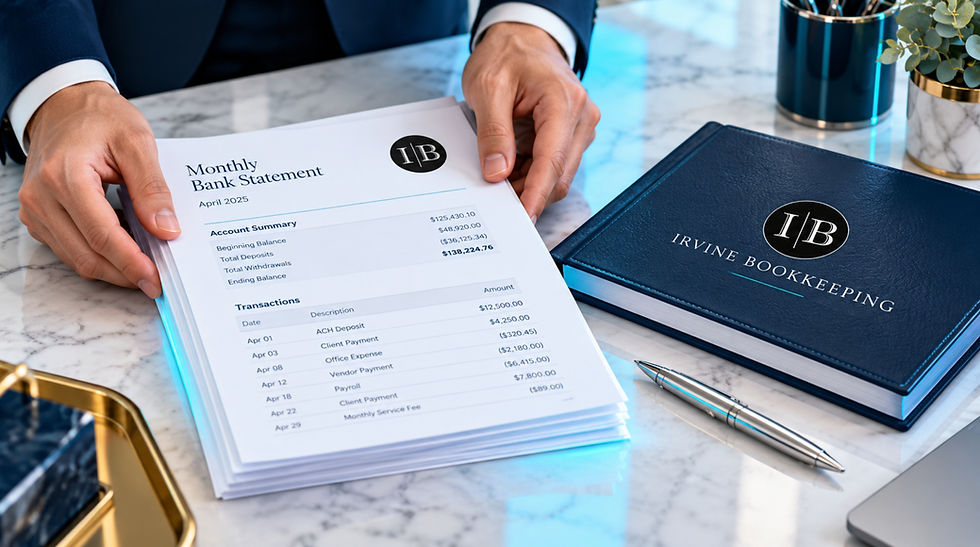
The certification is a statement that you are knowledgeable about the rules and in compliance with them. Your books are the proof. If the records do not support the answer, the certification creates its own risk.
The State Bar's recordkeeping standards under rule 1.15 define what the books must show: a written ledger for each client, a written journal for each bank account, all bank statements and cancelled checks, and each monthly reconciliation of those records. Records are kept for five years from the date of appropriate disbursement. The State Bar's CTAPP program also includes compliance reviews of selected attorneys, so records should be ready to produce.
A year-round routine makes the annual filing routine:
Complete client trust account reconciliation every month and keep the signed result.
Keep the account list current, including accounts opened or closed during the year.
Confirm the designated-licensee information with each bank, which Business and Professions Code section 6091.3 requires for IOLTA and non-IOLTA trust accounts.
Review the self-assessment topics a month before you file.
Firms that keep law firm trust accounting records current find that the certification takes little time, because the answers are already in the ledgers. Firms that do not often discover the gaps when the deadline is close.
For more detail on the process and the review side, see our guides to CTAPP requirements and the IOLTA checklist, the 2026 CTAPP guide for California law firms and what triggers a CTAPP compliance review.
How Irvine Bookkeeping Helps You Certify With Confidence?

Irvine Bookkeeping provides bookkeeping for law firms in Irvine and Orange County, including IOLTA bookkeeping, monthly reconciliation and catch-up bookkeeping. Our IOLTA bookkeeping services close each month with a documented match between the bank, the journal and the client ledgers, which is what the annual certification relies on.
As an Irvine law firm bookkeeping team led by a Certified QuickBooks ProAdvisor, we deliver legal bookkeeping services and California law firm bookkeeping that support California IOLTA compliance and CTAPP compliance. Our attorney trust account bookkeeping keeps the account list, ledgers and reconciliations organized, so the firm can complete the annual process under the attorney client trust account rules without scrambling.
For Irvine law firm bookkeeping clients, IOLTA bookkeeping services, legal bookkeeping services, attorney trust account bookkeeping, law firm trust accounting, client trust account reconciliation and California law firm bookkeeping follow the same attorney client trust account rules year-round.
If your records are behind before a filing, send us your statements and ledgers. We will assess the gap, bring the reconciliations current and give your attorneys documents they can rely on when they certify.
Talk with an Irvine law firm bookkeeping specialist
Schedule a consultation to review your IOLTA bookkeeping and CTAPP-ready records.
Call or Text: (949) 482-2790 | irvinebookkeeping.com


Comments